
How to Create Double Exposures on Film Without a Dedicated Function?
Double exposure in film photography is a fascinating creative technique that allows you to overlay two images onto a single frame. While some cameras feature a dedicated multiple-exposure lever, many film cameras do not offer this function. The good news? It is absolutely possible to create double exposures on film without a dedicated camera feature.
In this article, you’ll discover all the methods, recommended settings, and common mistakes to avoid in order to successfully create double exposures on film, even with a simple camera.
What Is Double Exposure in Film Photography?
A film double exposure consists of exposing the same frame of film twice, without advancing the film between shots. The final image is a visual superimposition where the two photographs merge into one.
This technique is widely used in:
- artistic photography
- creative portraiture
- conceptual photography
- experimental film photography
Why Doesn’t Your Film Camera Have a Double Exposure Function?
While many film cameras do include a double exposure feature—such as the Mamiya C330 in medium format, certain 35mm SLRs like the Nikon FE / FM / FA or Canon A-1, and some compacts like the Ricoh FF-7 / FF-9 or Pentax 105—most mechanical or semi-automatic cameras automatically advance the film when the shutter is cocked.
Without a disengagement mechanism, the film moves forward, preventing a second exposure on the same frame.
However, with a bit of technique, this limitation can be bypassed
Method 1: Slightly Rewinding the Film
This is the most commonly used technique to create film double exposures without a dedicated function.
Steps:
- Take your first photo
- Slightly rewind the film
- Cock the shutter
- Take the second photo
- Resume normal film advance
Important tips:
- Mark the rewind knob to monitor rotation
- Practice on a test roll
- Never rewind too forcefully (risk of disengaging the film)
👉 This method works very well on fully mechanical cameras.
Method 2: Tricking the Film Advance Lever
On some cameras:
- Hold down the film release button (usually located on the bottom of the camera)
- Gently cock the shutter
- The film remains (almost) stationary
- Release the shutter a second time
⚠️ This method requires precision and varies depending on the camera model.
Method 3: Exposing the Same Roll of Film Twice
This is the simplest method and does not require manipulating the camera like the two previous techniques:
-
Expose the entire roll once, slightly underexposing each frame.
- Rewind the film as if you were going to develop it : On mechanical cameras, you can stop rewinding before the leader fully retracts. On cameras with automatic rewind, use a film leader retriever
- Reload the film into your camera and expose it a second time.
💡Tip #1: Choose a bright subject on a dark background for the first exposure
Dark areas in the first image allow the second image to appear.
💡Tip #2: Use a marker to make a reference mark on the film when loading it the first time. This helps you reload it in the exact same position, ensuring proper alignment of your double exposures.
👉 This technique is perfect for collaborative projects or visual correspondence: one photographer exposes the film once, another completes the second exposure.
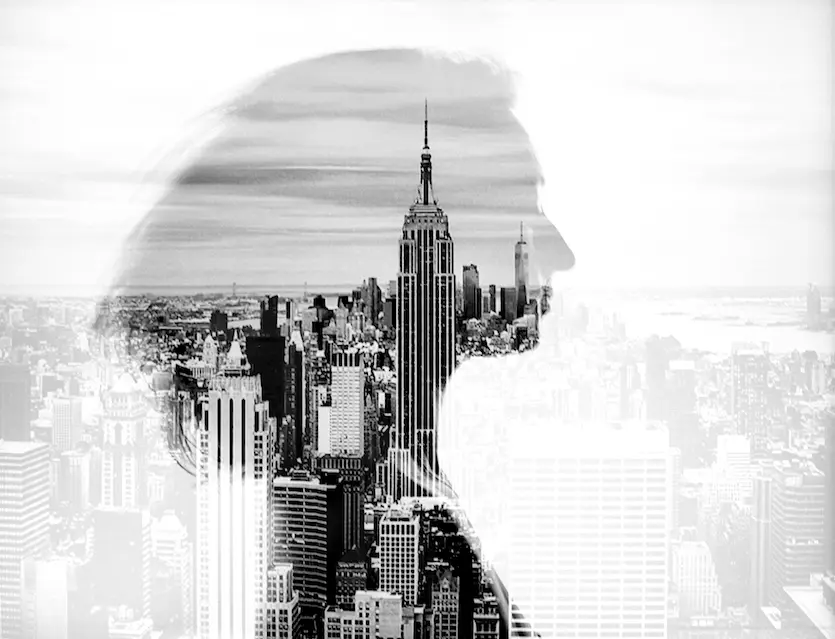
Recommended Settings for Film Double Exposure
To avoid overexposure:
- Expose each image at –1 or –2 stops
-
Use films with good exposure latitude, such as :
- Kodak Gold 200 / Ultra max 400
- Portra
- Ilford HP5
- Kentmere 400
- Use spot metering when possible
🎯 Goal: ensure the combined exposure remains balanced.
Choosing the Right Film for Double Exposure
Color films
- Wide exposure latitude
- Soft, organic results
- Ideal for beginners
Black & white films
- Higher contrast
- Greater control during development
- Perfect for graphic effects
Common Mistakes to Avoid
- ❌ Forgetting to compensate exposure
- ❌ Rewinding the film too forcefully
- ❌ Combining two very bright scenes
- ❌ Lacking visual coherence
Film double exposure requires anticipation and practice.
Creative Tips for Successful Double Exposures
- Silhouettes + landscapes
- Portraits + textures
- Architecture + sky
- Nature + graphic shapes
Think of film double exposure as visual storytelling, not randomness.
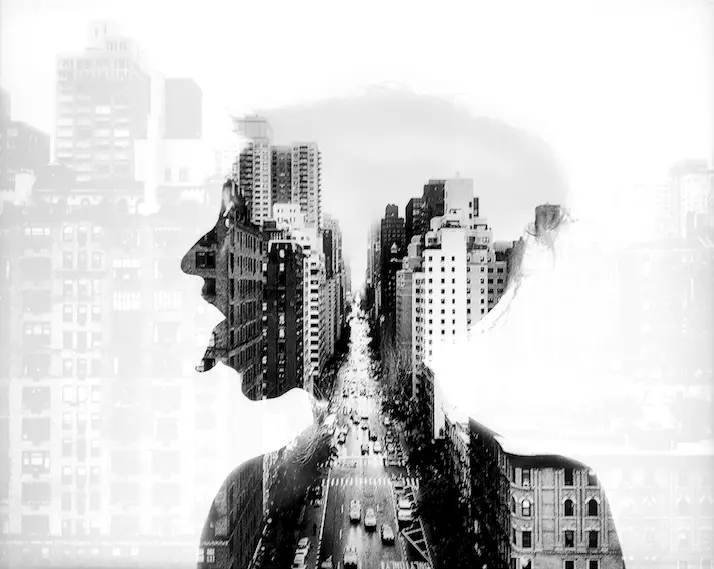
📸 Mamiya RZ Pro II + 🎞️ Delta 400
Can You Create Double Exposures With Any Film Camera?
Yes !
- Mechanical SLRs: ✔️
- Rangefinders: ✔️
- Automatic compact cameras : only Method 3 can be used.
Even without a dedicated function, double exposure on film remains accessible with the right approach.

📸 Olympus mju II + 🎞️ Harman Phoenix 200
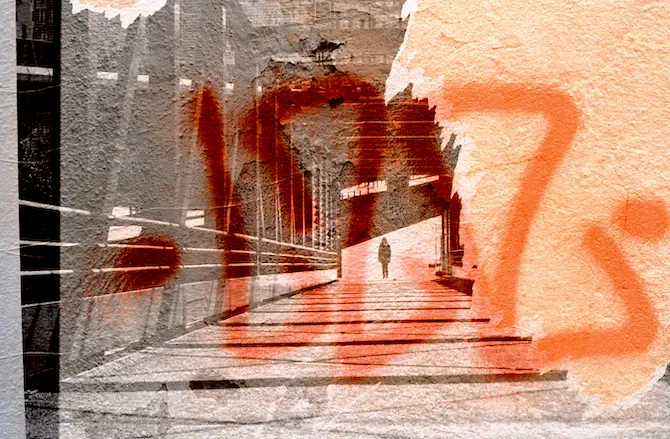
📸 Canon AE-1 + 🎞️ Fuji 200
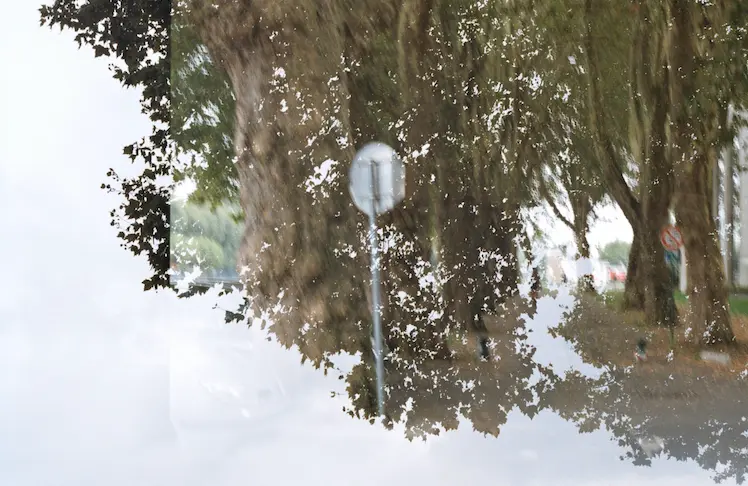
📸 Canon AE-1 + 🎞️ Fuji 200
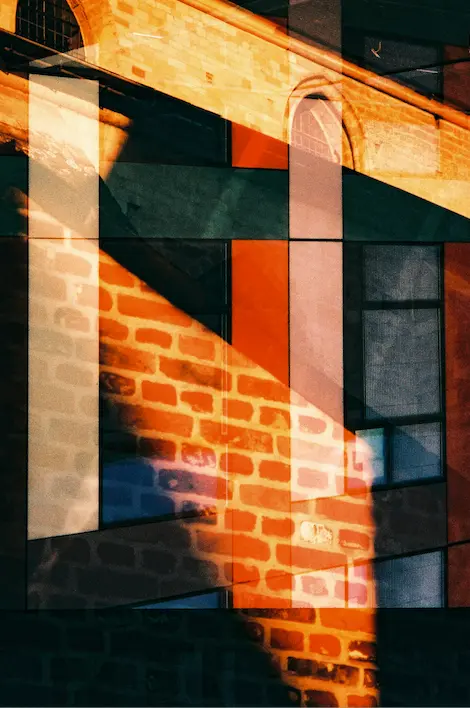
📸 Olympus mju II + 🎞️ Harman Phoenix 200
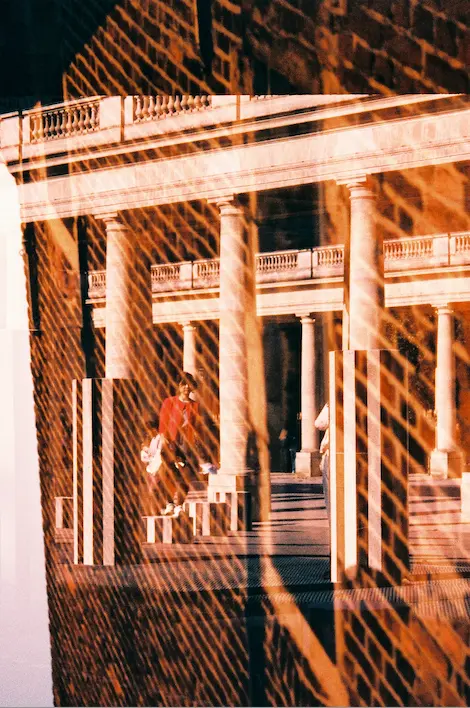
📸 Olympus mju II + 🎞️ Harman Phoenix 200
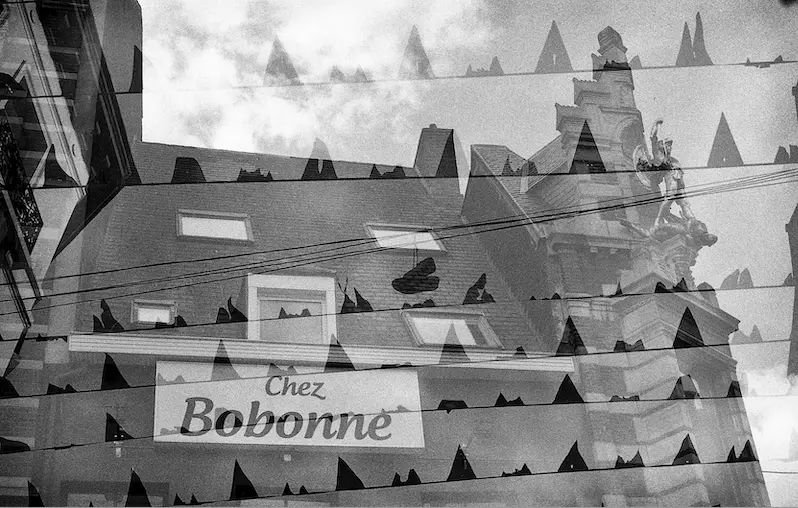
📸 Canon AE-1 + 🎞️ Fomapan 400
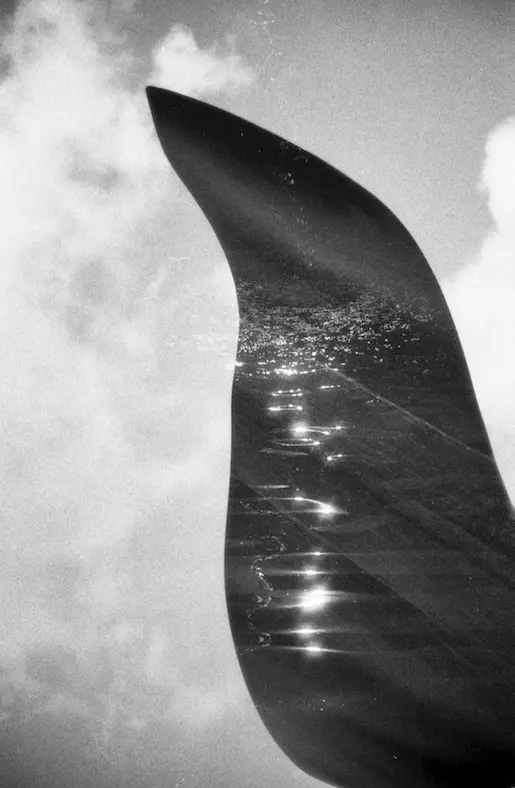
📸 Canon AE-1 + 🎞️ Fomapan 400
Conclusion: Film Double Exposure, a Creative Freedom
Creating double exposures on film without a built-in function is an excellent way to explore creative photography. It requires some technique, but delivers unique results that are impossible to perfectly replicate digitally.
🎞️ With film, every double exposure is a surprise — and that’s exactly what makes it beautiful.