
TheCinestill 50Dis a colour negative film derived from the famous Kodak Vision3 50D used in cinema. Its particularity: the absence of a remjet layer, which allows for standard C-41 development in any lab. It offers a soft rendering, subtlecolours, an extremely fine grain and that famoushalo around light sourcesthat gives an immediate cinematic look.
Why choose the Cinestill 50D
The Cinestill 50D is directly derived from the Kodak Vision3 50D, a reference in cinema. Without its remjet layer, it becomes compatible with standard C-41 development, accessible in any photo lab.
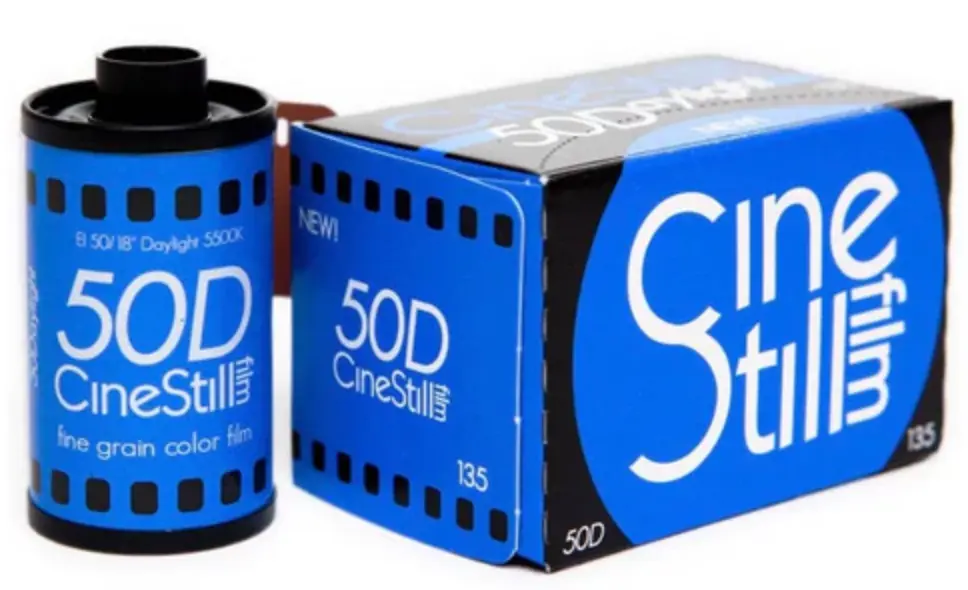
This film offers a cinematic look: soft colours, moderate contrast, flattering skin tones. The rendering is natural, with a depth that is difficult to achieve on other colour films.
The luminous halo around intense sources has become a signature of Cinestill. This flaw turned into an asset instantly gives a unique character to the images.
Its extremely fine grain allows for clean enlargements and very detailed scans, making it popular among photographers seeking a high-end rendering.
| Film | Development | Colour rendering | Halo effect | Grain |
|---|---|---|---|---|
| Cinestill 50D | C-41 (no remjet) | Soft, natural | Yes | Very fine |
| Kodak Vision3 50D | ECN-2 (remjet present) | Soft, cinema | No | Very fine |
| Kodak Ektar 100 | C-41 | Saturated, vivid | No | Fine |
Under what conditions does it really shine
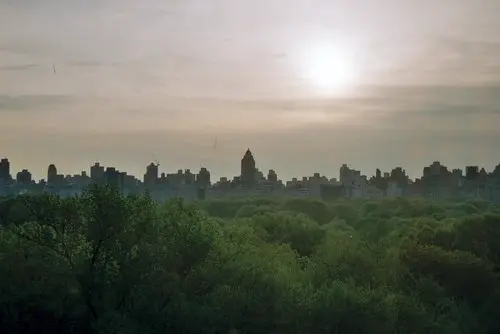
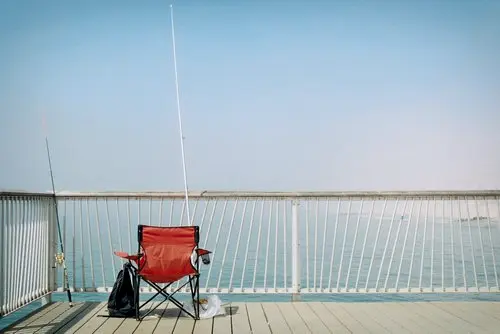
The Cinestill 50D excels in controlled light: bright sun, golden hour, studio light. It reveals soft colours and subtle contrast effortlessly in shooting.
It adapts perfectly to portraits, urban landscapes or architecture under stable light. In night scenes or at dusk, its halos on bright points give a unique signature, but they need to be anticipated.










Common setting suggestions
- In full sun: f/8 - 1/125 s
- Golden hour: f/4 - 1/60 s, consider a tripod if necessary
- Night scene with desired halo: f/2 - 1/30 s, imperative to be stable (tripod recommended)
- Studio / strong artificial light: f/5.6 - 1/125 s depending on the power of the sources
Recommended uses
- Portraits in natural or studio light
- Urban landscapes under stable light
- Architecture, facade details
- Artistic night scenes with bright points
What you need to know before using it
With its ISO 50, the Cinestill 50D requires strong light or the use of a tripod. It is not made for candid photography in unpredictable conditions.
The exposure must be precise. This film tolerates little deviation: a slight overexposure is better than underexposure, which will dull the colours and bring out unexpected grain.
The halo is an asset when it is intentional, but it can become bothersome if poorly anticipated. Backlighting, reflections on metal or glass can produce an overly pronounced effect.
C-41 development makes things easier, but some basic labs may risk unbalancing the cinema tones. It is better to choose a lab familiar with Cinestill films.
This film handles ND filters well to open the aperture further without blowing out the highlights, which expands its creative possibilities.
| Key point | Why it’s important | Practical advice |
|---|---|---|
| ISO 50 | Requires a lot of light or a tripod | Shoot in full sun or golden hour, use ND if necessary |
| Precise exposure | Low tolerance for errors | Better to slightly overexpose |
| Bright halo | Can enhance or ruin the image | Anticipate the position of light sources |
| C-41 development | Accessible but depends on the lab | Choose a lab that knows Cinestill |
Quick comparison: Cinestill 50D vs other low ISO films
| Film | Colour rendering | Grain | Exposure latitude | Halo effect | Development |
|---|---|---|---|---|---|
| Cinestill 50D | Soft, cinematic, natural | Very fine | Low to medium | Yes | C-41 |
| Kodak Ektar 100 | Very saturated, contrasted | Fine | Medium | No | C-41 |
| Kodak Portra 160 | Neutral, soft skin tones | Fine | Wide | No | C-41 |
| Kodak Vision3 50D | Soft, cinematic, natural | Very fine | Wide | No | ECN-2 |
The Cinestill 50D stands out for its halo effect and cinematic rendering, which is unavailable on other low ISO films on the market. Unlike Ektar, it remains very soft without excessive saturation. It is less forgiving than Portra 160 but offers a more distinctive look. Compared to Vision3, it offers a C-41 process accessible at the cost of the halo and less latitude.
Why it appeals to modern film photographers
The Cinestill 50D offers a unique cinematic look without going through a complex process like ECN-2. Developable in C-41, it remains easy to use while providing a rendering that is not found elsewhere.
It is a film that encourages creativity: the halo, soft colours, and fine grain invite experimentation with light and atmospheres.
It has found its place in artistic projects: portrait, urban, staged. Its visual signature appeals to those who want images with character without resorting to digital post-production.
This distinctive rendering, neither too saturated like an Ektar nor too neutral like a Portra, makes it a unique choice in the world of colour films.
Summary table of recommended settings
| Scene | Aperture | Recommended speed | Precaution |
|---|---|---|---|
| Full sun | f/8 | 1/125 s | Precise exposure |
| Golden hour | f/4 | 1/60 s | Tripod possible |
| Night with halo | f/2 | 1/30 s | Tripod essential |